Mastering Number Bonds to 10, 20, and 100 with Hit the Button
Understanding number bonds is a foundational skill in mathematics, crucial for developing fluency and confidence with arithmetic. This guide will explore how to effectively teach and learn number bonds to 10, 20, and 100, leveraging the engaging and effective Hit the Button math game. We’ll delve into the ‘why’ behind number bonds, practical strategies for mastery, and how Hit the Button transforms learning into an enjoyable experience.
Table of Contents
- Mastering Number Bonds to 10, 20, and 100 with Hit the Button
- What are Number Bonds?
- Why are Number Bonds Essential?
- Number Bonds to 10: The Building Blocks
- Number Bonds to 20: Expanding the Horizons
- Number Bonds to 100: The Power of Place Value
- Hit the Button: Making Practice Fun and Effective
- Strategies for Teaching and Learning Number Bonds
- Conclusion
What are Number Bonds?
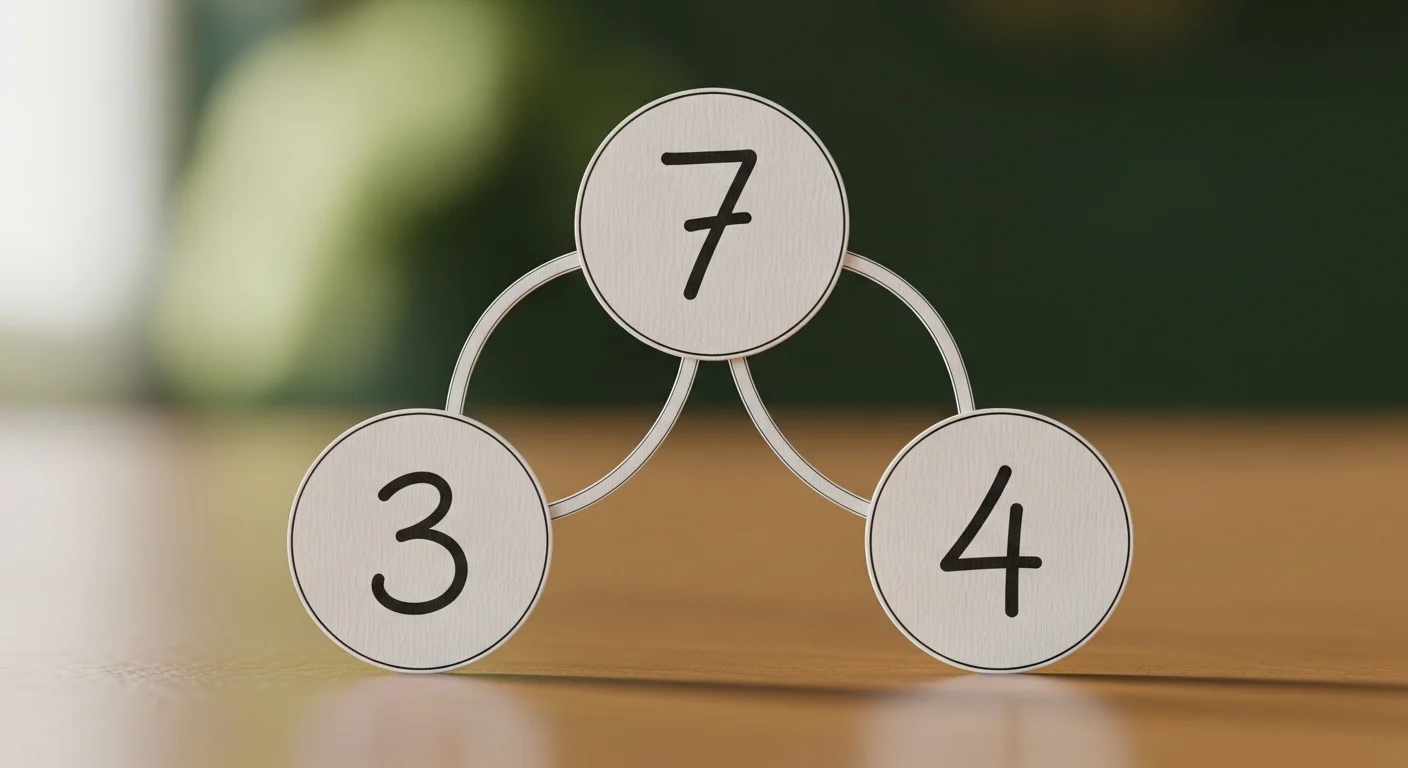
At its core, a number bond represents the relationship between a whole number and its parts. For example, for the number 5, the number bonds are (1, 4), (2, 3), (3, 2), and (4, 1). This concept extends to larger numbers. Understanding these relationships allows children to see numbers as flexible entities that can be broken down and recombined, a vital skill for addition, subtraction, and mental math.
Why are Number Bonds Essential?
The mastery of number bonds forms the bedrock of mathematical understanding. When children instinctively know how numbers are composed, they can:
* Perform mental math with ease: Quickly solve addition and subtraction problems without needing to count on their fingers or use manipulatives.
* Develop strong number sense: Gain an intuitive grasp of quantity and the relationships between numbers.
* Build a foundation for more complex concepts: Number bonds are precursors to understanding place value, fractions, and algebraic thinking.
* Increase confidence and reduce math anxiety: By internalizing these fundamental relationships, children feel more competent and less intimidated by mathematical challenges.
Number Bonds to 10: The Building Blocks
Number bonds to 10 are the first step in this journey. They involve pairs of numbers that add up to 10. Examples include (1, 9), (2, 8), (3, 7), (4, 6), and (5, 5).
Information Gain: Children often struggle with the transition from counting all to partitioning numbers. Focusing on number bonds to 10 explicitly teaches them that a number (e.g., 7) can be made by combining other numbers (e.g., 3 and 4). This understanding directly aids in developing strategies for addition and subtraction within 10, such as “counting on” by breaking down the second number (e.g., 6 + 5 = 6 + 4 + 1 = 10 + 1 = 11).
Number Bonds to 20: Expanding the Horizons
Once secure with number bonds to 10, the concept is extended to 20. This involves understanding how numbers up to 20 are composed, often by making 10 first. For instance, to calculate 8 + 7, a child can use their knowledge of number bonds to 10: 8 + 2 = 10, and the remaining 5 from the 7 gives us 10 + 5 = 15.
Information Gain: The ‘making 10’ strategy is paramount for number bonds to 20. Explicitly teaching children to identify the ‘complement to 10’ within the addend they are adding can significantly speed up their arithmetic. For example, with 7 + 5, they see that 7 needs 3 to make 10, and they have 2 left over from the 5 (5 = 3 + 2), leading to 10 + 2 = 12. This strategy directly addresses the common difficulty of adding numbers that cross the 10 threshold.
Number Bonds to 100: The Power of Place Value
Number bonds to 100 build upon the previous concepts and introduce the idea of place value. This can involve pairs of numbers that add up to 100 (e.g., 30 + 70 = 100) or understanding how to make 100 using tens (e.g., 4 tens + 6 tens = 10 tens = 100).
Information Gain: For number bonds to 100, the emphasis shifts to understanding that 100 is composed of ten tens. Children who have mastered number bonds to 10 will find this easier, as they can think of 100 as ‘ten groups of 10’. For example, to find out what adds to 65 to make 100, they can ask: ‘How many more tens do I need to reach 100 from 60?’ (4 tens) and ‘How many more ones do I need to reach 100 from 65?’ (35). This reinforces the concept that 100 is a benchmark and can be approached through additive steps that are familiar from smaller number bonds.
Hit the Button: Making Practice Fun and Effective
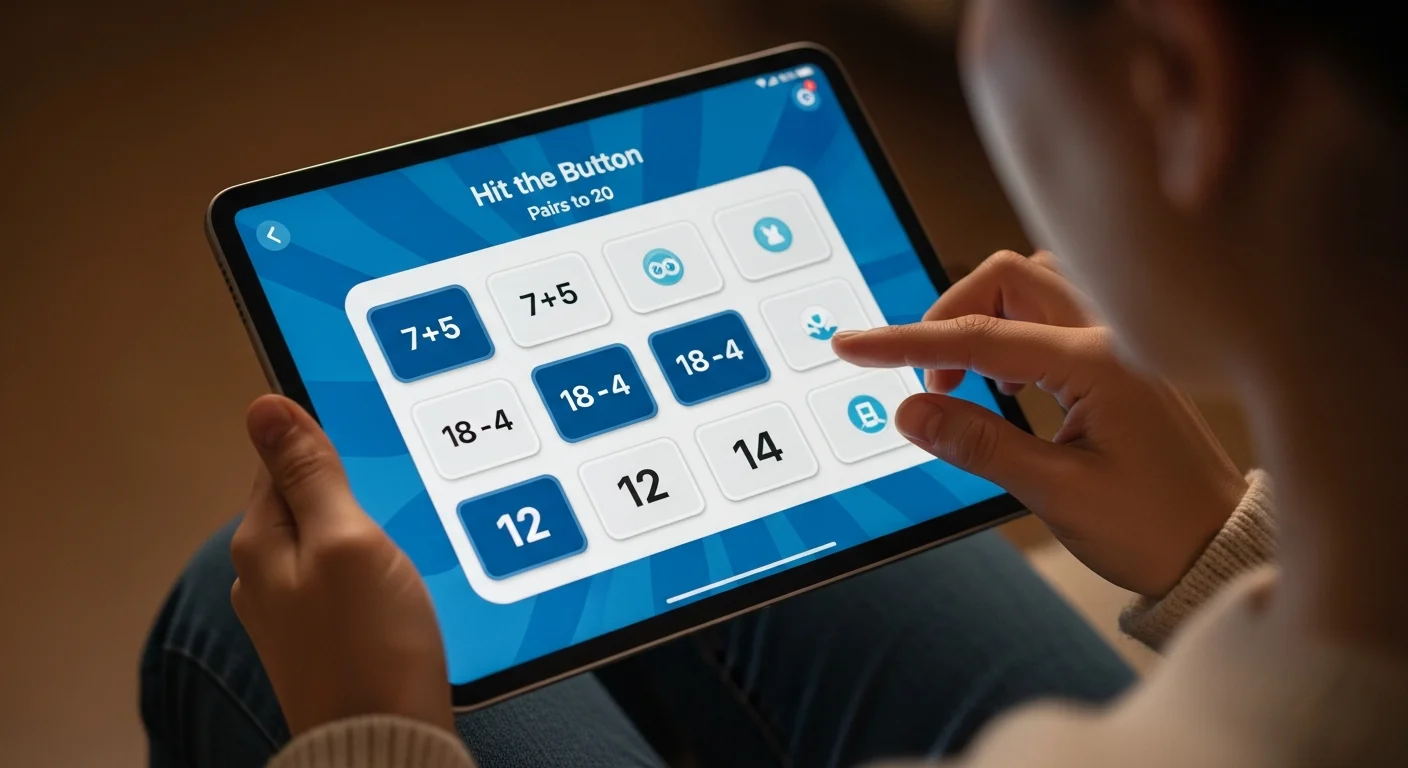
The Hit the Button game is an exceptional tool for reinforcing number bond knowledge. Its gamified approach, with timed challenges and progressive difficulty, motivates children to practice and improve.
* Varied Game Modes: Hit the Button offers multiple game modes, including ‘Pairs to 10’, ‘Pairs to 20’, and ‘Make 100’, directly targeting the number bond concepts discussed.
* Instant Feedback: The game provides immediate feedback, allowing children to quickly identify and correct errors, solidifying their understanding.
* Repetitive Practice in a Fun Context: The engaging format encourages repeated practice, which is essential for building automaticity and fluency with number bonds.
* Progression and Challenge: As children improve, the game can be set to faster speeds or more challenging questions, ensuring they are continually stretched and developing their skills.
Strategies for Teaching and Learning Number Bonds
Beyond using games, several strategies can enhance the learning of number bonds:
* Manipulatives: Use physical objects like counters, blocks, or bead strings to visually represent number bonds.
* Number bond diagrams: Encourage children to draw or use physical number bond frames (a circle for the whole, two smaller circles for the parts) to illustrate the relationships.
* Real-world examples: Connect number bonds to everyday situations, such as sharing sweets or counting objects.
* Focus on understanding, not just memorization: While memorization is a result of practice, ensure the underlying concept of a whole and its parts is understood.
* Celebrate progress: Acknowledge and praise effort and improvement, fostering a positive attitude towards math.
Conclusion
Mastering number bonds to 10, 20, and 100 is a cornerstone of mathematical proficiency. By understanding the ‘why’ and employing effective strategies, including the invaluable Hit the Button game, children can build a robust foundation for future mathematical success. The journey from simple bonds to 10 to the more complex bonds to 100 is one of progressive understanding, enhanced by practice and engagement.
