Mastering Mental Division Facts with Hit the Button Math Game
Understanding the Building Blocks of Division
Division is a fundamental arithmetic operation that often presents a challenge for young learners. Unlike addition, subtraction, and even multiplication, division involves understanding the concept of splitting a whole into equal parts. Mental division facts, the quick recall of division equations, are crucial for building a strong mathematical foundation. They enable students to solve more complex problems efficiently, understand concepts like fractions and ratios, and build confidence in their mathematical abilities. Many children struggle with memorizing these facts because they perceive division as abstract or “undoing” multiplication, which can be confusing. This guide will focus on practical strategies to make learning mental division facts engaging and effective, particularly within the context of the Hit the Button math game.
Table of Contents
- Mastering Mental Division Facts with Hit the Button Math Game
- Understanding the Building Blocks of Division
- Strategies for Learning and Recalling Mental Division Facts
- Leveraging Multiplication Families
- Developing Number Sense and Patterns
- The Role of Hit the Button in Practicing Division Facts
- Hit the Button Modes for Division Mastery
- Tips for Parents and Educators to Enhance Learning
- Making Division Relatable
- Building Confidence and Reducing Anxiety
- Conclusion: From Facts to Fluency
Strategies for Learning and Recalling Mental Division Facts
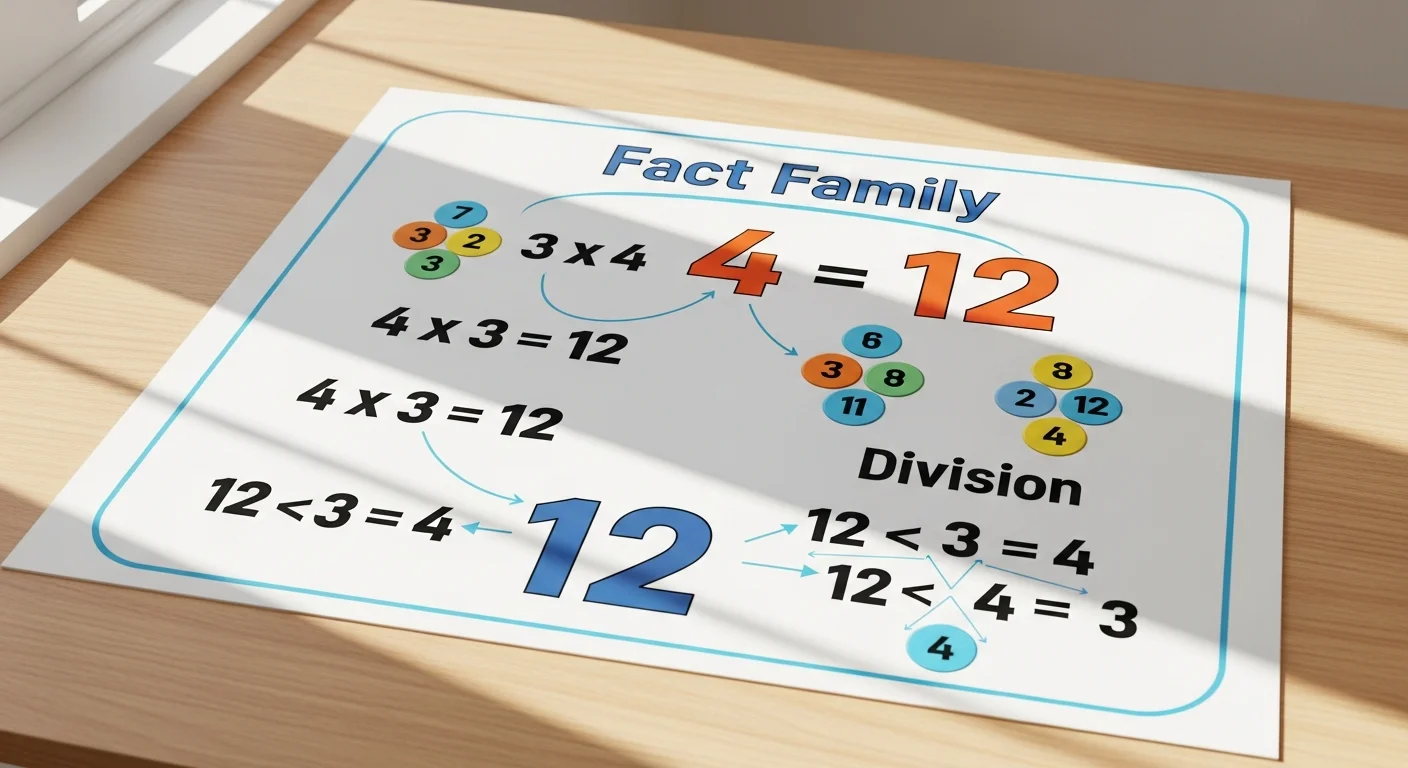
The key to mastering mental division facts lies in understanding the inverse relationship between multiplication and division. Instead of memorizing division facts in isolation, learners can leverage their existing multiplication knowledge.
Leveraging Multiplication Families
For every multiplication fact, there are corresponding division facts. For example, if a child knows that 5 x 6 = 30, they automatically know that 30 ÷ 5 = 6 and 30 ÷ 6 = 5. Focusing on these “fact families” reinforces understanding and reduces the number of individual facts to memorize. Hit the Button is excellent for this, as its modes often present related facts, encouraging this connection.
Developing Number Sense and Patterns
Beyond fact families, recognizing patterns in division is vital. For instance, dividing by 10 always results in moving the decimal point one place to the left (or removing a zero for whole numbers). Dividing by 2 is the same as finding half. Encouraging children to look for these patterns makes division less about rote memorization and more about logical deduction.
The Role of Hit the Button in Practicing Division Facts
Hit the Button is a highly effective tool for practicing mental division facts due to its gamified approach. It offers various modes that target specific aspects of division, allowing for tailored practice.
Hit the Button Modes for Division Mastery
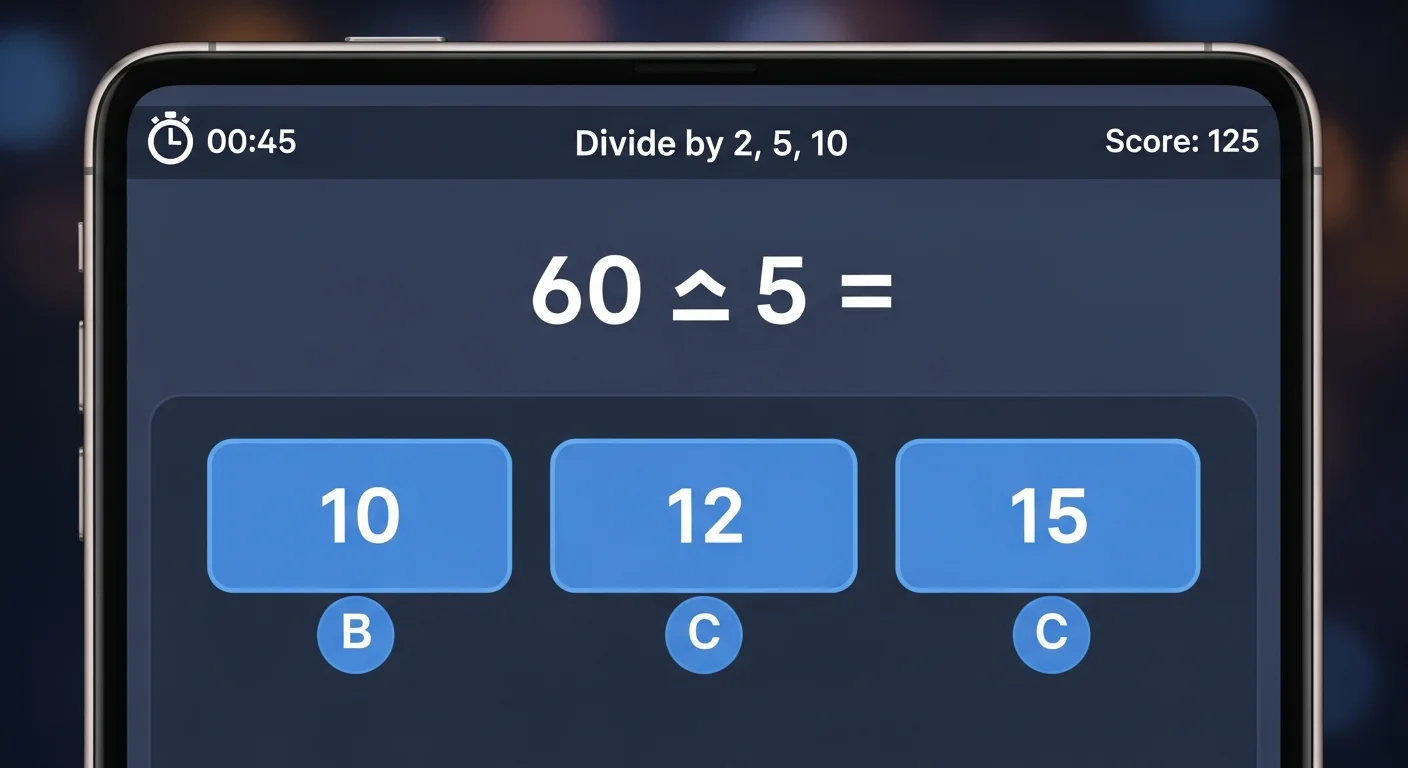
* “Divide by 2, 5, 10”: This mode is excellent for beginners, focusing on the most common and easily recognizable division facts. It helps build initial confidence.
* “Divide by 3, 4, 8”: As learners progress, this mode introduces slightly more challenging divisors, requiring a deeper understanding of multiplication facts.
* “Divide by 6, 7, 9, 11, 12”: This advanced mode tests fluency with the remaining multiplication and division facts.
* “Mixed Up”: Once individual sets are mastered, the “Mixed Up” mode is crucial for developing the ability to recall any division fact quickly and accurately, simulating real-world problem-solving scenarios.
The game’s timed nature encourages speed and accuracy, while the visual feedback and scoring system provide immediate reinforcement and motivation.
Tips for Parents and Educators to Enhance Learning
While Hit the Button is a powerful resource, supplementing its use with other strategies can significantly accelerate mastery.
Making Division Relatable
* Real-World Scenarios: Use everyday situations to practice division. For example, “If we have 24 cookies and want to share them equally among 4 friends, how many cookies does each friend get?”
* Manipulatives: Use physical objects like blocks, counters, or even snacks to visually represent the division process. Splitting a group of items into equal smaller groups can make the concept tangible.
* Visual Aids: Continue to use multiplication fact families charts and draw out division problems to reinforce the inverse relationship.
Building Confidence and Reducing Anxiety
It’s important to create a positive and supportive learning environment. Celebrate small successes and avoid putting undue pressure on children. Encourage a growth mindset, emphasizing that learning takes time and practice. When using Hit the Button, allow children to start with easier levels and gradually increase the difficulty as they feel more comfortable. Focus on progress rather than perfection.

Conclusion: From Facts to Fluency
Mastering mental division facts is a journey that requires understanding, practice, and a little bit of fun. By leveraging the power of multiplication fact families, recognizing number patterns, and utilizing engaging tools like the Hit the Button math game, students can build the fluency and confidence needed to excel in mathematics. The key is to approach division not as an isolated skill but as an integral part of the broader mathematical landscape, reinforcing its connections to other operations. Consistent practice, coupled with a supportive learning environment, will transform the challenge of division into a demonstrable strength.