Hit the Button Math: UK Schools’ Top Score Strategies for December 2025
Mastering Multiplication, Addition, Subtraction, and Division for Peak Performance
The “Hit the Button” game has become an indispensable tool in UK primary schools, a quick and engaging way to reinforce fundamental arithmetic skills. As we approach December 2025, educators and students are honing their strategies to achieve top scores and build lasting mathematical fluency. This guide delves into the expert approaches that UK schools are leveraging, focusing on how to maximise performance in multiplication, addition, subtraction, and division.
Table of Contents
- Hit the Button Math: UK Schools’ Top Score Strategies for December 2025
- Mastering Multiplication, Addition, Subtraction, and Division for Peak Performance
- The Foundation: Understanding Speed and Accuracy
- Multiplication Mastery: Building Instant Recall
- Addition and Subtraction Fluency: The Inverse Relationship
- Division as the Inverse of Multiplication
- Strategies for December 2025: Beyond the Game
- The Long-Term Impact of “Hit the Button” Mastery
The Foundation: Understanding Speed and Accuracy
At its core, “Hit the Button” rewards both speed and accuracy. Students who can recall number facts instantly and without hesitation are naturally at an advantage. The key to dominance lies in developing a deep, almost automatic, recall of these essential number bonds. This isn’t just about rote memorisation; it’s about building a mental framework where calculations become intuitive. For December 2025, the focus remains on consistent practice, targeted interventions for weaker areas, and encouraging a growth mindset where mistakes are seen as learning opportunities.
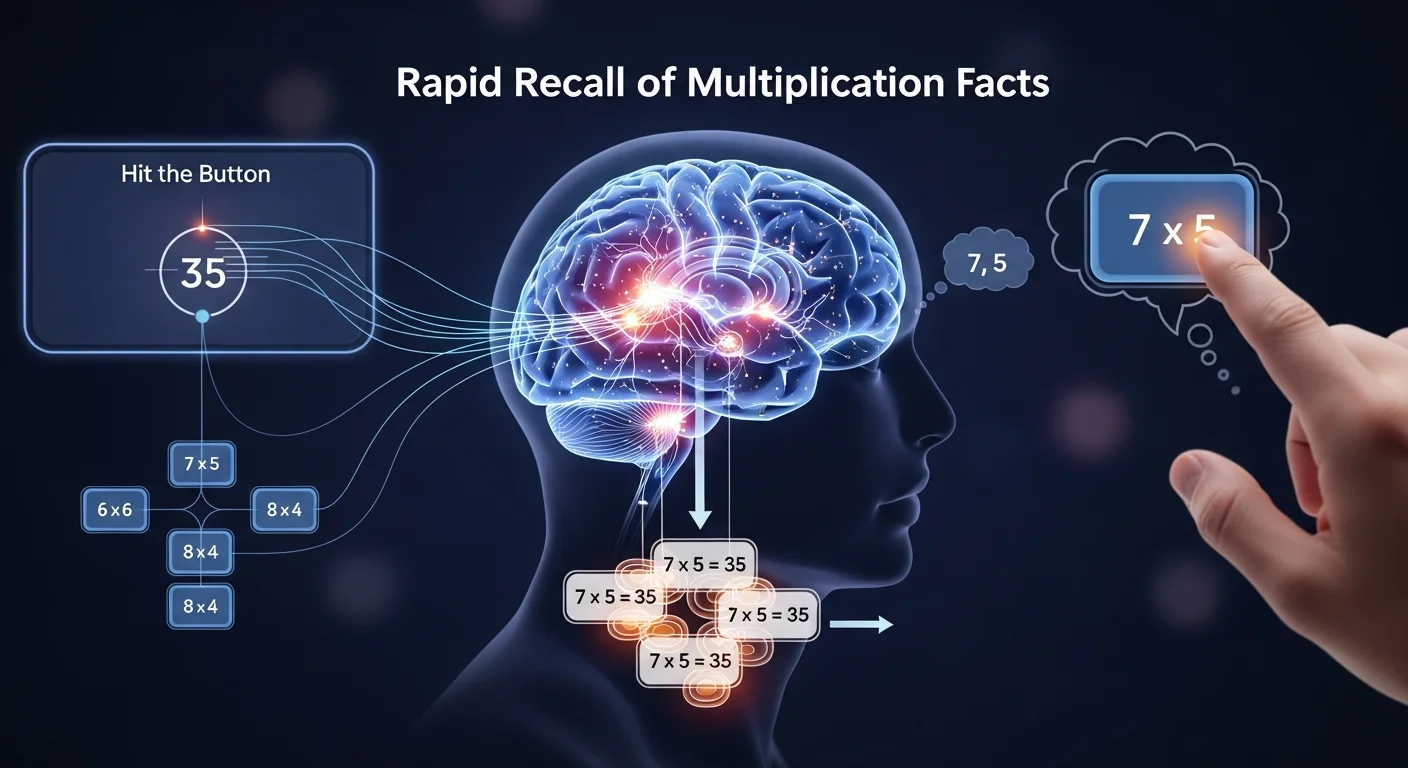
Multiplication Mastery: Building Instant Recall
Multiplication tables are the bedrock of arithmetic. To excel in this section of “Hit the Button,” students need to move beyond simply reciting tables. Strategies include:
* **Pattern Recognition:** Understanding that 7 x 8 is the same as 8 x 7 (commutative property) can halve the number of facts to memorise. Highlighting patterns, such as the ‘nines trick’ or the properties of multiplying by 10 or 11, is crucial.
* **Fact Families:** Linking related facts, like 3 x 4 = 12, 4 x 3 = 12, 12 ÷ 3 = 4, and 12 ÷ 4 = 3, strengthens comprehension and recall.
* **Targeted Practice:** Identifying ‘sticky’ times tables (those that are consistently harder to remember) and dedicating specific practice sessions to them is vital. Schools often use visual aids and flashcards outside of the game to reinforce these.
* **Real-World Application:** Connecting multiplication to practical scenarios, like calculating the number of wheels on multiple cars or the total cost of items, makes the learning more meaningful and memorable.
Addition and Subtraction Fluency: The Inverse Relationship
Addition and subtraction are intrinsically linked. Achieving high scores involves recognising this inverse relationship and using it to one’s advantage.
* **Number Bonds to 10, 20, and 100:** A solid grasp of these fundamental bonds is non-negotiable. For instance, knowing that 7 + 3 = 10 instantly means that 10 – 3 = 7 and 10 – 7 = 3 are also known.
* **Counting On and Back:** While direct recall is fastest, strategies like counting on (e.g., 15 + 6: count on 6 from 15) or counting back for subtraction are essential fallback mechanisms that build speed over time.
* **Mental Maths Strategies:** Teaching techniques such as partitioning (e.g., 27 + 15 = 20 + 7 + 10 + 5) or compensation (e.g., 35 – 8 = 35 – 10 + 2) can significantly speed up mental calculations.
* **Recognising Near Doubles:** Understanding that 7 + 6 is close to 7 + 7 (14) and then subtracting 1 (to get 13) is a powerful shortcut.

Division as the Inverse of Multiplication
For division, the strategy is almost entirely about leveraging multiplication facts.
* **Fact Families Revisited:** If a student knows that 6 x 7 = 42, they automatically know that 42 ÷ 6 = 7 and 42 ÷ 7 = 6.
* **Chunking and Grouping:** Visualising division as sharing or grouping can help. For example, 24 ÷ 3 can be thought of as “how many groups of 3 can I make from 24?” or “how many times does 3 fit into 24?”.
* **Repeated Subtraction:** While slower, for less familiar facts, repeated subtraction can be used as a verification method, gradually becoming more efficient with practice.
* **Connecting to Multiplication Tables:** Consistently reinforcing that division is the ‘opposite’ of multiplication is key. When presented with a division problem, the immediate thought process should be “What number multiplied by the divisor equals the dividend?”.
Strategies for December 2025: Beyond the Game
While “Hit the Button” is the arena, preparation happens far from the screen.
* **Consistent Daily Practice:** Even 5-10 minutes daily on “Hit the Button” or similar games yields significant results. Consistency is more impactful than infrequent, long sessions.
* **Targeted Intervention:** Teachers use game data to identify specific students or groups struggling with particular operations or number facts. This allows for tailored support, perhaps through targeted worksheets, small group instruction, or one-on-one coaching.
* **Gamification Beyond the Game:** Schools are increasingly incorporating elements of gamification into their lessons. This could involve leaderboards, reward systems for achieving personal bests, or team-based challenges, all reinforcing the positive association with arithmetic practice.
* **Parental Involvement:** Encouraging parents to support their children’s learning at home, perhaps through playing the game together or using printable resources, is a powerful multiplier.
* **Focus on Understanding, Not Just Speed:** While speed is rewarded, it’s crucial that it’s built on a foundation of genuine understanding. Rote memorisation without comprehension is brittle. Educators ensure that students can explain *why* a fact is correct.

The Long-Term Impact of “Hit the Button” Mastery
Achieving high scores on “Hit the Button” by December 2025 isn’t just about a fleeting leaderboard victory. It signifies a deeper embedding of foundational mathematical skills. This fluency frees up cognitive load, allowing students to tackle more complex problems and abstract concepts in later years. It builds confidence, reduces maths anxiety, and fosters a lifelong positive relationship with numbers. The strategies employed by UK schools, focused on understanding, consistent practice, and targeted support, ensure that “Hit the Button” continues to be a powerful engine for mathematical achievement.