Times Tables Practice Game
Mastering Multiplication with Times Tables Practice Games
Times tables are a fundamental building block in mathematics, and for young learners, mastering them can unlock a world of more complex mathematical concepts. While rote memorization has its place, engaging times tables practice games offer a far more dynamic and effective approach. These games transform repetitive drills into exciting challenges, fostering a deeper understanding and retention of multiplication facts. This guide will explore the benefits of using games for times tables practice and provide actionable strategies for educators and parents to leverage them effectively.
Table of Contents

Why Games Are Superior for Times Tables Practice
Traditional methods of learning times tables, such as flashcards and worksheets, can often lead to boredom and disengagement. This can create negative associations with math, hindering a child’s progress. Times tables practice games, on the other hand, tap into intrinsic motivation through elements like competition, rewards, and problem-solving. This active engagement leads to:
- Improved Retention: Learning through play embeds multiplication facts more deeply in a child’s memory. The multi-sensory experience of a game reinforces connections more effectively than passive recall.
- Enhanced Understanding: Many games don’t just test recall; they encourage children to think strategically about multiplication. This could involve identifying patterns, understanding the commutative property (e.g., 7×8 is the same as 8×7), or visualizing multiplication as repeated addition.
- Increased Motivation and Confidence: The fun and rewarding nature of games make practice enjoyable. Successfully completing challenges and achieving high scores builds confidence, encouraging children to tackle more difficult multiplication problems.
- Reduced Math Anxiety: By reframing practice as play, games can alleviate the pressure and anxiety often associated with math drills. This creates a more positive learning environment.
- Targeted Practice: Many digital times tables games allow for customization, enabling users to focus on specific multiplication tables that they find challenging. This personalized approach ensures efficient learning.
Key Features of Effective Times Tables Practice Games
When selecting or designing times tables practice games, several key features contribute to their effectiveness. These elements ensure that the game is not only fun but also pedagogically sound:
- Immediate Feedback: Children need to know instantly if their answer is correct or incorrect. This allows for immediate correction of misconceptions and reinforces correct answers.
- Progressive Difficulty: Games should start with simpler multiplication facts (e.g., 2s, 5s, 10s) and gradually introduce more challenging tables (e.g., 7s, 8s, 9s, 11s, 12s).
- Timed Challenges: Introducing a time element can simulate real-world pressure and improve fluency. However, this should be implemented with care, perhaps as an optional feature or in later stages of learning.
- Variety of Game Modes: Offering different types of games (e.g., speed challenges, puzzles, story-based adventures) caters to different learning styles and keeps engagement high.
- Reward Systems: Earning points, unlocking new levels, or receiving virtual badges can be powerful motivators for continued practice.
- Visual and Auditory Engagement: Appealing graphics and sounds can make the learning experience more immersive and enjoyable.
Implementing Times Tables Practice Games in Learning
Integrating times tables practice games into a learning routine is straightforward. Here are some actionable tips:
For Parents:
- Dedicate Short, Regular Sessions: Aim for 10-15 minute sessions daily or several times a week rather than one long session.
- Choose Age-Appropriate Games: Ensure the game’s interface and complexity are suitable for your child’s age and developmental stage.
- Play Together: Engage with your child in the games. This can make it a bonding activity and allow you to offer support.
- Celebrate Progress: Acknowledge their efforts and achievements, whether it’s mastering a new table or improving their speed.
- Balance Digital and Physical: While digital games are excellent, don’t discount physical games or even creating your own simple multiplication challenges.
For Educators:
- Incorporate into Daily Routines: Use games as warm-ups at the start of a math lesson or as engaging fillers.
- Differentiate Instruction: Use games to provide targeted practice for students who need extra support or to offer extension activities for advanced learners.
- Create a Competitive but Supportive Classroom Environment: Organize friendly class competitions or group challenges using games.
- Track Progress: Utilize the reporting features of digital games to monitor individual student progress and identify areas needing further attention.
- Encourage Peer Teaching: Have students who excel at certain games teach their classmates strategies.
By embracing the power of play, times tables practice games offer a fun, effective, and engaging pathway to multiplication mastery. They transform what can be a tedious task into an enjoyable learning experience, setting children up for greater success in mathematics.

Frequently Asked Questions (FAQ)
What are the most important times tables to focus on first?
Generally, the 2s, 5s, and 10s are the easiest to learn due to their simple patterns. The 3s and 4s are the next logical step, followed by the more challenging 6s, 7s, 8s, 9s, 11s, and 12s.
How often should a child practice times tables?
Short, frequent practice sessions are more effective than long, infrequent ones. Aim for 10-15 minutes daily or several times a week.
Are there any free online times tables practice games?
Yes, many websites offer free times tables practice games. Searching for ‘free times tables games’ will yield numerous options.
How can I help a child who is struggling with times tables?
Identify the specific tables they are struggling with. Use a variety of methods, including games, visual aids, and real-world examples. Patience and positive reinforcement are key.
When should a child typically know their times tables?
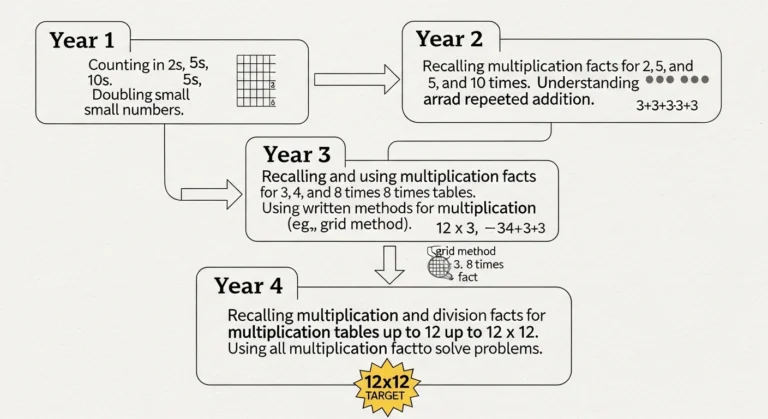
By the end of Year 4 (around age 9) in the UK curriculum, or by the end of 3rd grade in the US, students are generally expected to know their multiplication and division facts up to 12×12.