Number Bonds To 10, 20 & 100
Mastering Number Bonds to 10, 20, and 100: A Hit the Button Expert Guide
Understanding number bonds is a foundational skill in mathematics, crucial for developing fluency and confidence in arithmetic. Number bonds are simply pairs of numbers that add up to a specific target number. Mastering these bonds, particularly to 10, 20, and 100, unlocks a deeper comprehension of addition, subtraction, and number relationships. This guide, tailored for users of the Hit the Button math game, will delve into the strategies and importance of number bonds, providing actionable insights to accelerate your mastery.
Table of Contents
Why Number Bonds Matter
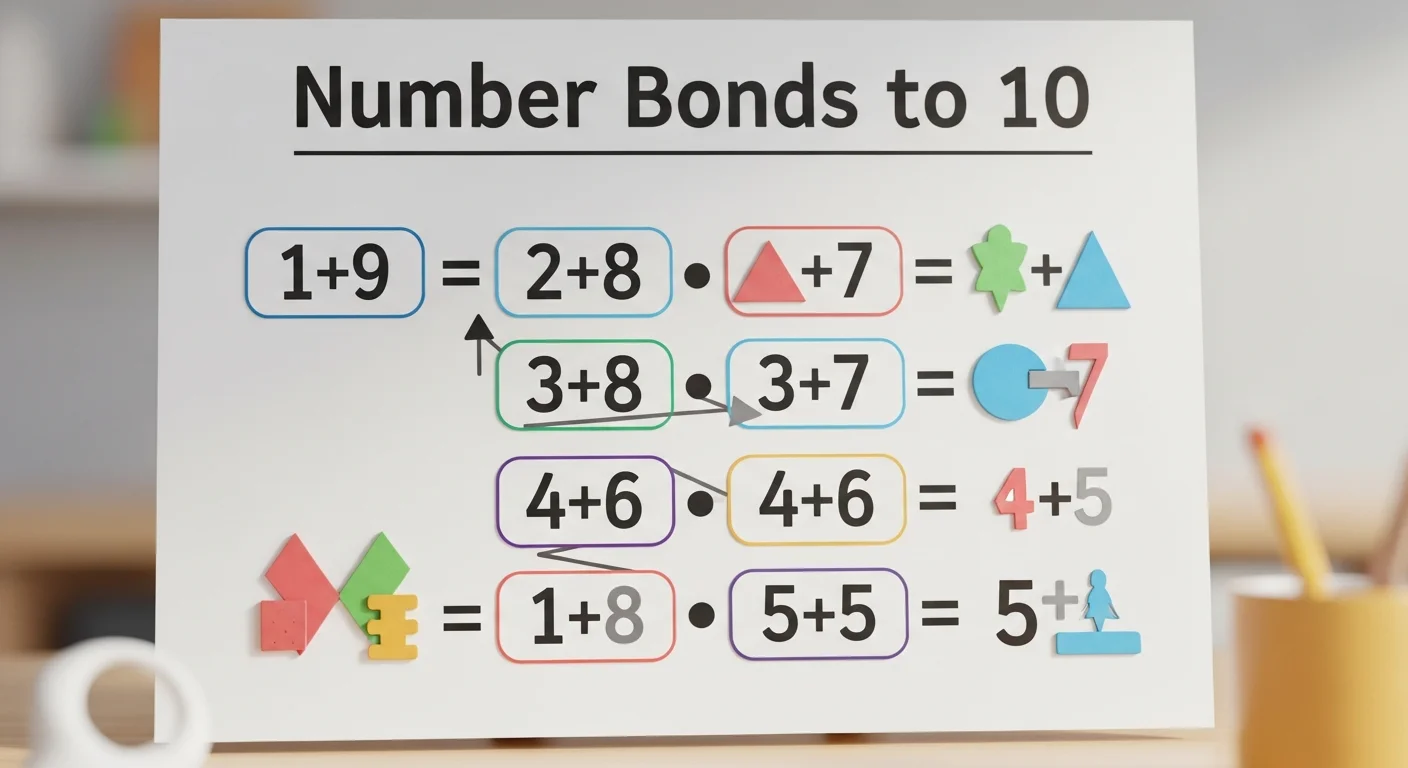
The ability to instantly recall number bonds is akin to having a mental toolbox for quick calculations. When children know that 7 and 3 make 10, solving 10 – 3 becomes an immediate recall, rather than a laborious counting process. This mental agility frees up cognitive resources for more complex problem-solving. For number bonds to 20 and 100, this principle scales, enabling efficient mental addition and subtraction within larger numbers. For instance, understanding that 100 can be broken down into 80 + 20 or 50 + 50 makes calculations like 100 – 80 a breeze.
Strategies for Mastering Number Bonds to 10
Number bonds to 10 are the bedrock of all further number bond understanding. Consistent practice is key.
* **Visualisation and Manipulatives:** Using objects like counters, blocks, or even fingers can make the concept concrete. Show how combining a certain number of objects with another set makes a total of 10.
* **Songs and Rhymes:** Many catchy songs and rhymes are designed to teach number bonds to 10. Repetition through engaging methods aids memory retention.
* **Tens Frames:** A tens frame is a 2×5 grid that visually represents numbers up to 10. Filling the frame to show different combinations that make 10 is highly effective.
* **The “What’s Missing?” Game:** Start with a number less than 10 and ask, “What do I need to add to [number] to make 10?” This encourages active recall.
Building on Number Bonds to 20
Once number bonds to 10 are secure, extending to 20 becomes more manageable.
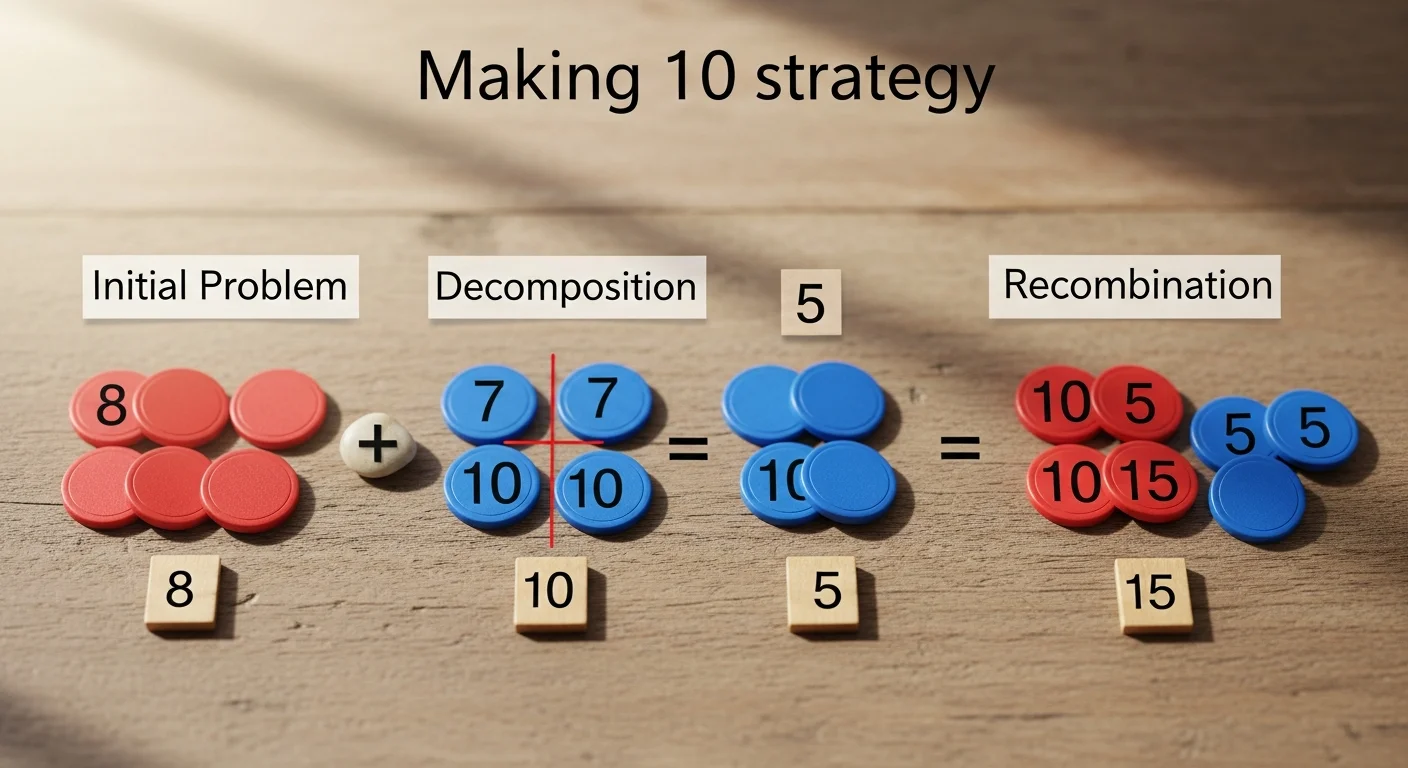
* **”Making 10″ Strategy:** Many number bonds to 20 can be solved by first making 10. For example, to solve 17 + 5, a child can see it as 17 + 3 (to make 20) + 2 (the remaining part of 5), resulting in 22.
* **Fact Families:** Understanding fact families (e.g., for 7 + 3 = 10, the related facts are 3 + 7 = 10, 10 – 7 = 3, and 10 – 3 = 7) reinforces the inverse relationship between addition and subtraction. This principle applies to bonds to 20 as well.
* **Number Lines:** Using a number line to visually represent jumps of 10 and then smaller increments can help solidify bonds to 20.
Advanced Number Bonds to 100
Number bonds to 100 are essential for mental arithmetic involving tens and hundreds.
* **Counting in Tens:** Mastering counting by tens (10, 20, 30, …, 100) is fundamental. This allows for quick identification of pairs that make 100 (e.g., 30 + 70 = 100).
* **Decomposition and Composition:** Understanding that 100 can be broken down into different combinations of tens (e.g., 10 tens, 5 tens and 5 tens, 8 tens and 2 tens) is crucial. This also involves recognizing how to compose numbers to reach 100.
* **Bridging through 100:** For addition and subtraction problems that cross the 100 mark, the “making 100” strategy is invaluable. For instance, to calculate 95 + 8, one can add 5 to 95 to make 100, and then add the remaining 3 (from 8), resulting in 103.
The Role of Hit the Button in Number Bond Mastery
The Hit the Button game provides a dynamic and engaging platform for practicing number bonds. Its timed challenges encourage quick recall and build confidence. By repeatedly facing different number bond combinations within the game, players internalize these facts, transforming them from conscious calculations into instant recognition. The progressive difficulty levels allow learners to gradually build their mastery from the fundamental bonds to 10 up to more complex bonds to 100. Regular play on Hit the Button directly addresses the need for consistent, varied practice, which is the cornerstone of mathematical fluency.
Frequently Asked Questions
What are the most important number bonds to learn first?
The most crucial number bonds to master initially are those that make 10. Once these are secure, it becomes much easier to learn bonds to 20 and then extend to 100.
How can I help my child if they are struggling with number bonds?
Use a variety of manipulatives, games, and visual aids. Break down the concept into smaller steps and celebrate small successes. Consistent, low-pressure practice is key.
Is memorisation the only way to learn number bonds?
While memorisation plays a role, it’s most effective when combined with conceptual understanding. Strategies like “making 10” and visualising number relationships help build a deeper, more lasting grasp of number bonds.