Mental Division Facts
Mastering Mental Division Facts: A Comprehensive Guide for Young Learners
Mental division facts are the foundational building blocks for understanding division. They empower students to solve division problems quickly and accurately without relying on algorithms or calculators. For children using engaging platforms like Hit the Button, mastering these facts can transform math practice into an enjoyable and rewarding experience. This guide delves into the ‘why’ and ‘how’ of mental division fact mastery, providing strategies and insights for educators and parents.
Table of Contents
- Mastering Mental Division Facts: A Comprehensive Guide for Young Learners
- Why Mental Division Facts Matter
- Strategies for Building Mental Division Fact Fluency
- The Role of Hit the Button in Mastering Division Facts
- Frequently Asked Questions about Mental Division Facts
- What are the most important division facts for a child to learn first?
- How long does it typically take to master mental division facts?
- Should I use flashcards or an app like Hit the Button?
- My child struggles with division facts. What can I do?
- How does learning division facts help with fractions?
Why Mental Division Facts Matter
The ability to recall division facts instantly offers several key benefits:
* **Enhanced Problem-Solving Skills:** A strong grasp of division facts frees up cognitive resources, allowing students to focus on the more complex aspects of word problems and multi-step calculations.
* **Improved Fluency and Speed:** Just as with multiplication, knowing division facts by heart dramatically speeds up mathematical processing. This is crucial for timed challenges and assessments.
* **Foundation for Higher Mathematics:** Division is a fundamental operation. Proficiency here underpins understanding of fractions, decimals, ratios, proportions, and algebraic concepts.
* **Increased Confidence and Reduced Math Anxiety:** Success breeds confidence. When children can confidently answer division questions, their overall attitude towards math improves. Games like Hit the Button leverage this by providing immediate positive reinforcement.
* **Real-World Application:** Division is used daily in countless scenarios, from sharing items equally to calculating unit prices. Quick recall makes these everyday tasks easier.
Strategies for Building Mental Division Fact Fluency
Achieving mastery involves more than just rote memorization. A multi-faceted approach that emphasizes understanding and varied practice is most effective.
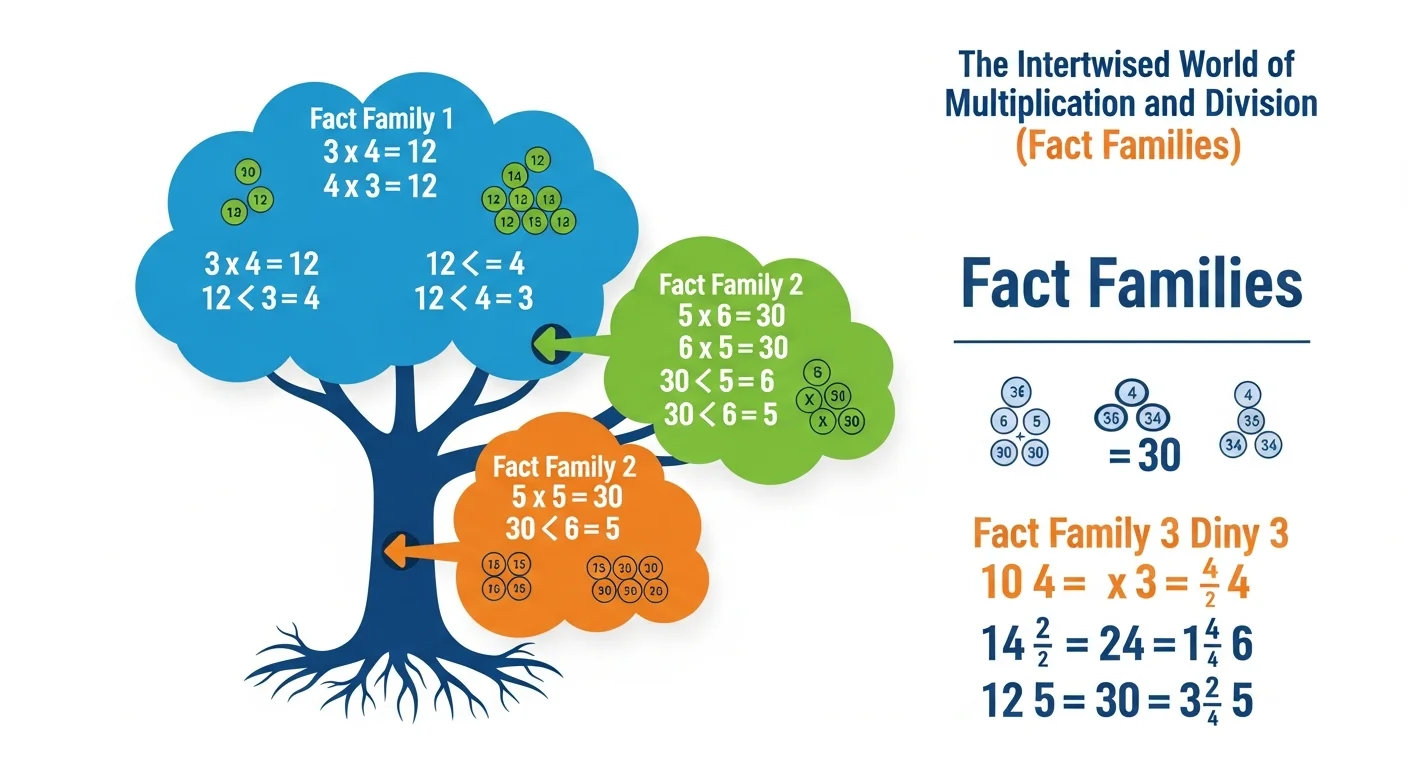
1. Leverage the Multiplication Connection (Fact Families)
Division is the inverse operation of multiplication. Understanding fact families is the most powerful strategy for learning division facts. For every multiplication fact, there are two corresponding division facts.
* **Example:** If a child knows that 5 x 6 = 30, they automatically know that 30 ÷ 5 = 6 and 30 ÷ 6 = 5.
* **Actionable Tip:** Encourage children to say the entire fact family aloud. “5 times 6 is 30, 6 times 5 is 30, 30 divided by 5 is 6, and 30 divided by 6 is 5.”
2. Focus on Key Divisors
Some divisors are more fundamental and appear more frequently. Prioritizing these can yield significant early wins.
* **Essential Divisors:** Start with dividing by 2, 5, and 10.
* **Dividing by 2:** This is the same as finding half. Connect it to even and odd numbers.
* **Dividing by 5:** Numbers divisible by 5 always end in 0 or 5. The quotient will tell you how many groups of 5.
* **Dividing by 10:** Numbers divisible by 10 always end in 0. The quotient is simply the number without the trailing zero.
* **Actionable Tip:** Create dedicated practice sessions for these core divisors before moving on to others.
3. Visualize and Use Manipulatives
Concrete examples help solidify abstract concepts.
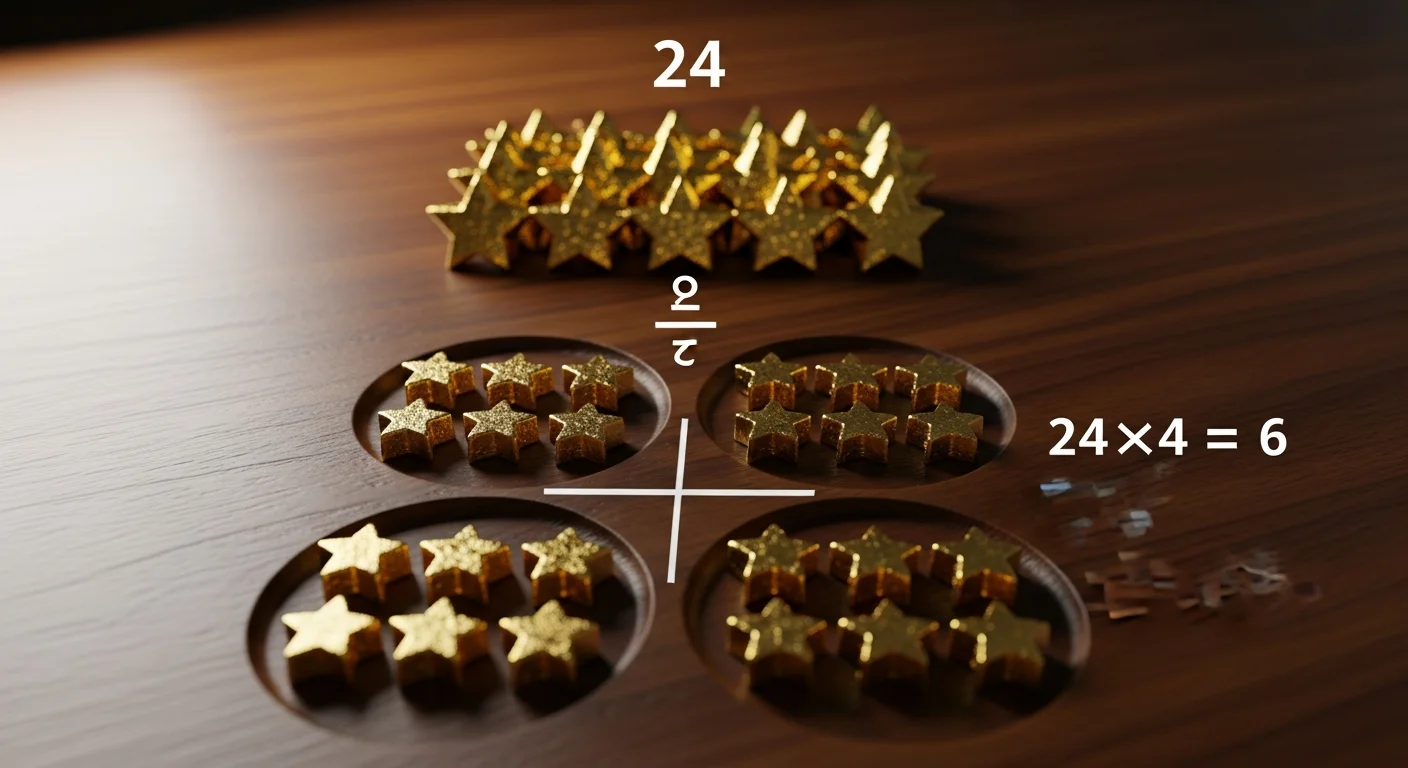
* **Arrays and Groups:** Use objects like counters, blocks, or even drawings to represent division. For 12 ÷ 4, show 12 objects and ask how many groups of 4 can be made, or how to divide them into 4 equal groups.
* **Number Lines:** Visualize division as repeatedly subtracting the divisor or jumping backward on a number line.
* **Actionable Tip:** When practicing, ask children to explain *how* they know the answer using a visual strategy. This reinforces understanding beyond mere recall.
4. Practice with Games and Varied Formats
Repetition is key, but it should be engaging and varied to prevent boredom and cater to different learning styles.
* **Timed Drills:** Games like Hit the Button are excellent for building speed and accuracy under gentle pressure.
* **Flashcards:** Traditional flashcards are still effective for quick recall practice.
* **Worksheets:** Targeted worksheets focusing on specific division families or divisors provide structured practice.
* **Story Problems:** Applying division facts to real-world scenarios makes them meaningful.
* **Actionable Tip:** Rotate through different practice methods. If a child is struggling with a particular fact, try a different approach. For example, if flashcards aren’t working, use a manipulative or a number line.
5. Identify and Address Patterns
Recognizing patterns in division can significantly simplify learning.
* **Dividing by Itself:** Any non-zero number divided by itself equals 1 (e.g., 7 ÷ 7 = 1).
* **Dividing by One:** Any number divided by 1 equals itself (e.g., 15 ÷ 1 = 15).
* **Actionable Tip:** Explicitly teach these basic rules. They are often overlooked but are crucial for building a robust mental math toolkit.
6. Encourage Estimation and Reasoning
For larger numbers, estimation can be a useful precursor to exact calculation.
* **Rounding:** Teach students to round numbers to the nearest multiple of the divisor. For 43 ÷ 5, they might think of 40 ÷ 5 = 8, so the answer will be a little more than 8.
* **Actionable Tip:** This strategy helps build number sense and makes division less intimidating.
The Role of Hit the Button in Mastering Division Facts
Hit the Button is specifically designed to reinforce these mental math skills through gamification. Its timed challenges, immediate feedback, and progression system motivate children to practice consistently. The game targets various math facts, including division, and allows users to focus on specific tables. This targeted practice, combined with the fun element, makes it an invaluable tool for building instant recall of division facts.
Frequently Asked Questions about Mental Division Facts
What are the most important division facts for a child to learn first?
The most important division facts to learn first are those related to the multiplication tables children have already mastered, especially the ‘easy’ ones like dividing by 2, 5, and 10. These provide immediate successes and build confidence.
How long does it typically take to master mental division facts?
The time it takes varies greatly depending on the child’s age, prior exposure, and practice consistency. For many children, consistent, focused practice for 15-20 minutes daily over several weeks can lead to significant fluency.
Should I use flashcards or an app like Hit the Button?
Both flashcards and apps like Hit the Button are valuable. Flashcards offer a tangible, low-tech approach. Apps like Hit the Button provide engaging, interactive, and often timed practice that can be more motivating for some children and offer immediate feedback and progress tracking. A combination is often best.
My child struggles with division facts. What can I do?
If your child struggles, go back to the basics:
- Ensure they have a strong grasp of multiplication facts.
- Focus on understanding the concept of division through visuals and manipulatives.
- Break down practice into smaller, manageable chunks.
- Use games and make practice fun.
- Identify specific facts they struggle with and provide targeted practice.
- Be patient and offer encouragement.
How does learning division facts help with fractions?
Learning division facts is fundamental to understanding fractions. A fraction like 3/4 can be interpreted as 3 divided by 4. Understanding division helps in simplifying fractions, converting fractions to decimals, and performing operations with fractions.