Government Policy On Times Tables Testing: How Hit The Button Fits In UK Curriculum
Understanding Government Policy on Times Tables Testing in the UK
The National Curriculum and Times Tables Fluency
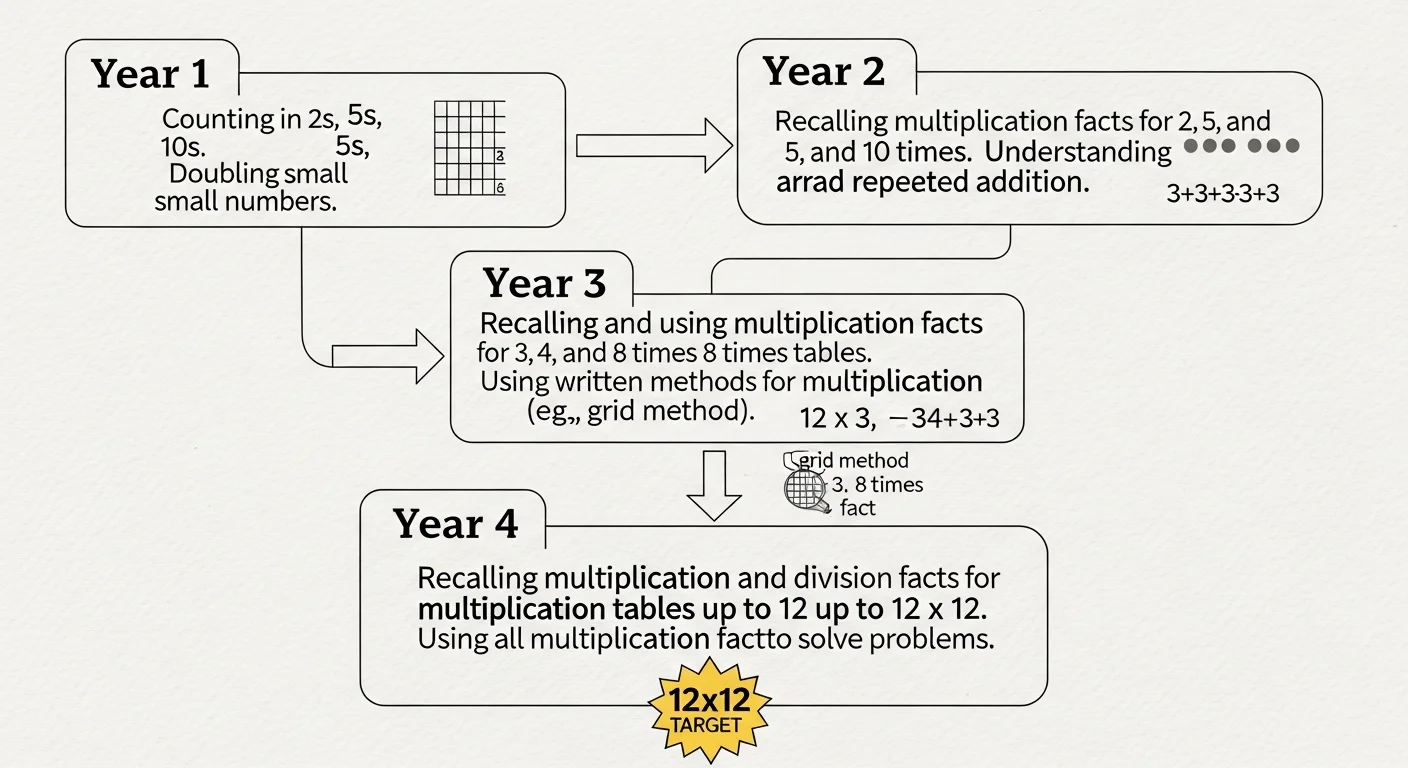
The UK government places significant emphasis on developing strong foundational mathematical skills in primary school children. A cornerstone of this is the mastery of multiplication tables. The National Curriculum, updated to reflect these priorities, mandates that by the end of Year 4, pupils should be able to recall multiplication and division facts up to 12×12. This isn’t merely about rote memorisation; it’s about fostering fluency, which is crucial for understanding more complex mathematical concepts later on. Fluency allows children to apply their knowledge quickly and efficiently, freeing up cognitive resources for problem-solving and reasoning.
Table of Contents
- Understanding Government Policy on Times Tables Testing in the UK
- The National Curriculum and Times Tables Fluency
- The Times Tables Check: Purpose and Impact
- How Hit the Button Aligns with UK Curriculum Aims
- Strategies for Teachers and Parents Using Hit the Button
- The Role of Times Tables Mastery in Broader Mathematical Understanding
- Conclusion
The Times Tables Check: Purpose and Impact
To assess the effectiveness of teaching multiplication tables and to ensure schools are meeting the curriculum objectives, the government introduced the statutory Times Tables Check (TTC) for Year 4 pupils. This online test is designed to be adaptive, meaning the difficulty adjusts based on the pupil’s responses. It primarily tests recall of multiplication facts, with a small proportion of division questions. The TTC aims to identify pupils who may be struggling with times tables recall, allowing for targeted intervention. While it’s a diagnostic tool, its introduction has undeniably put increased focus on this specific skill across primary schools. Schools are encouraged to adopt various strategies and resources to prepare their pupils for this assessment.
How Hit the Button Aligns with UK Curriculum Aims
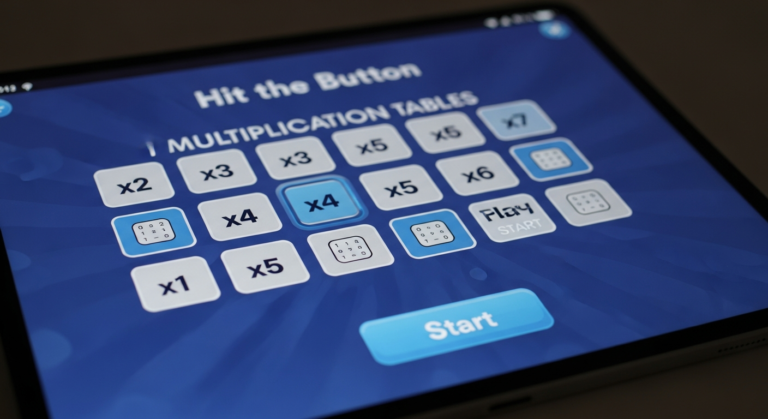
Hit the Button is a widely recognised and highly effective online math game that directly supports the UK government’s policy on times tables testing and the National Curriculum objectives. The game is designed to make practicing multiplication and division facts engaging and fun, which is key to sustained learning. Its progressive nature means it can cater to a wide range of abilities, from beginners just starting with their 2s and 5s, to those aiming to master the full 12×12 set.
Key Features of Hit the Button for Curriculum Compliance:
* Coverage of National Curriculum Objectives: Hit the Button provides practice for all multiplication and division facts up to 12×12, directly aligning with the Year 4 curriculum requirement.
* Focus on Fluency and Speed: The timed nature of the game encourages rapid recall, a critical component of the Times Tables Check. It helps children develop automaticity, moving beyond conscious calculation.
* Differentiated Practice: The game allows users to select specific tables to focus on, or to practice mixed tables. This is invaluable for teachers and parents looking to address individual learning needs and gaps.
* Engaging and Motivating Format: The game’s intuitive interface, rewarding sounds, and competitive element (achieving higher scores) keep children motivated to practice regularly. This intrinsic motivation is a powerful driver for learning.
* Instant Feedback: Children receive immediate feedback on their answers, allowing them to self-correct and learn from their mistakes in real-time. This is crucial for reinforcing correct knowledge.

Strategies for Teachers and Parents Using Hit the Button
Teachers can integrate Hit the Button into their daily maths lessons, using it as a warm-up activity, a plenary session, or a dedicated practice slot. It can be used on interactive whiteboards for whole-class engagement or on individual devices for personalised practice. Parents can utilise Hit the Button at home to supplement school learning, reinforcing concepts and helping their children build confidence. The key is consistent, regular practice. Aiming for short, frequent sessions is often more effective than infrequent, longer ones. Encourage children to aim for improvement rather than perfection, celebrating small victories as they progress through the tables.
The Role of Times Tables Mastery in Broader Mathematical Understanding
Mastering multiplication and division facts is not an isolated skill. It forms the bedrock for numerous other mathematical areas, including fractions, decimals, percentages, algebra, and problem-solving. When children can quickly recall times tables, they can dedicate more mental energy to understanding the underlying principles of these more advanced topics. The government’s focus, therefore, on times tables fluency is a strategic investment in a child’s overall mathematical development. Hit the Button, by making this essential practice enjoyable and accessible, plays a vital role in supporting this broader educational goal.

Conclusion
The UK government’s policy on times tables testing, exemplified by the Year 4 Times Tables Check, underscores the importance of rapid recall for primary school pupils. Hit the Button stands as an exceptional resource that not only aligns perfectly with these curriculum aims but also makes the learning process enjoyable and effective. By providing engaging, differentiated, and timely practice, the game empowers both educators and parents to help children achieve the fluency necessary for success in their current studies and future mathematical endeavours.