
Unlock Your Child’s Potential: Expert Tips From UK Teachers On Maximising Hit The Button’s Impact.
Maximising Hit the Button’s Impact: Expert Insights from UK Teachers
Hit the Button is a beloved resource for parents and educators across the UK, designed to make mastering essential math facts engaging and fun for children. But how can you ensure your child is truly unlocking their full potential with this powerful tool? This guide, compiled with direct insights from experienced UK teachers, offers practical strategies to maximise the impact of Hit the Button, transforming screen time into significant learning gains.
Table of Contents
- Maximising Hit the Button’s Impact: Expert Insights from UK Teachers
- Understanding the Core of Hit the Button’s Success
- The Importance of Foundational Math Facts
- Expert Strategies for Parent and Child Engagement
- 1. Set Clear, Achievable Goals
- 2. Focus on Specific Skills
- 3. Integrate Hit the Button into Daily Routines
- 4. Play Together and Make it a Family Affair
- 5. Link Game Play to Real-World Math
- Addressing Common Challenges and Ensuring Progression
- 1. Overcoming Frustration and Building Resilience
- 2. Moving Beyond Memorisation to Understanding
- 3. Identifying and Supporting Learning Differences
- 4. Gradual Introduction to New Skills
- Sustaining Momentum and Long-Term Impact
Understanding the Core of Hit the Button’s Success
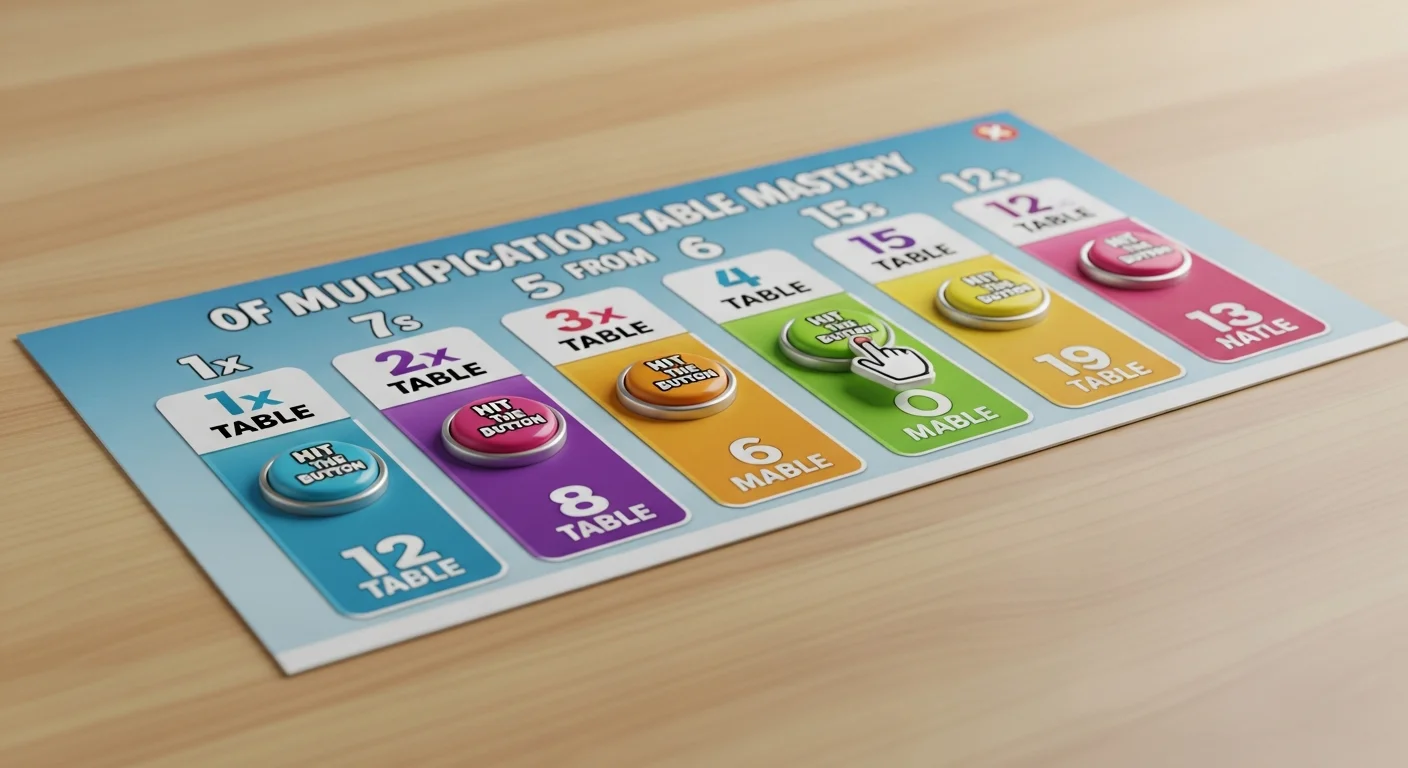
At its heart, Hit the Button capitalises on repetition, gamification, and immediate feedback – all crucial elements for solidifying foundational mathematical understanding. Teachers consistently highlight its ability to build speed and accuracy, which are vital for tackling more complex mathematical concepts later on. The game’s adaptive nature, often adjusting difficulty based on performance, ensures children are challenged without becoming discouraged.
The Importance of Foundational Math Facts
Before diving into strategies, it’s essential to understand *why* mastering these facts is so critical. Teachers report a direct correlation between strong recall of multiplication, addition, subtraction, and division facts and a child’s confidence and competence in problem-solving. When children don’t have to spend mental energy recalling basic facts, they can dedicate more cognitive resources to understanding and applying mathematical principles. This is where Hit the Button shines, providing a low-stakes environment to build this essential fluency.
Expert Strategies for Parent and Child Engagement
Simply assigning Hit the Button is rarely enough. Active involvement from parents and a strategic approach can dramatically amplify its benefits. UK teachers suggest the following:
1. Set Clear, Achievable Goals
Instead of open-ended play, encourage parents to set weekly or even daily goals. This could be mastering a specific times table, achieving a certain score, or reducing the time taken to answer questions. Celebrate these small victories to maintain motivation.
2. Focus on Specific Skills
Hit the Button offers various game modes. Encourage parents to identify areas where their child struggles and focus practice on those specific skills. For instance, if division facts are a challenge, dedicate time to the division games rather than trying to tackle everything at once.
3. Integrate Hit the Button into Daily Routines
Consistency is key. Suggest incorporating a few minutes of Hit the Button into a child’s daily routine, perhaps before homework, during a designated “learning break,” or even while waiting for dinner. This regular exposure reinforces learning without feeling like a chore.
4. Play Together and Make it a Family Affair
Teachers often observe that when parents engage with their child’s learning tools, it sends a powerful message about the importance of education. Parents can play alongside their children, challenging each other, or simply offering encouragement. This shared experience can also reveal areas where the child needs more support.
5. Link Game Play to Real-World Math
Bridge the gap between the digital game and practical application. After a session on Hit the Button, encourage children to use their newfound speed and accuracy in real-world scenarios. For example, if they’ve been practicing multiplication, ask them to help calculate how many biscuits are needed for everyone or how much change they should expect at a shop.

Addressing Common Challenges and Ensuring Progression
While Hit the Button is highly effective, some children may encounter hurdles. Teachers offer these solutions:
1. Overcoming Frustration and Building Resilience
It’s natural for children to feel frustrated when they don’t get answers right away. Teachers advise parents to frame mistakes as learning opportunities. Emphasise that it takes practice and that improvement is the goal, not immediate perfection. Encourage breaks when frustration levels rise.
2. Moving Beyond Memorisation to Understanding
While Hit the Button excels at memorisation, it’s crucial to ensure children also understand the underlying mathematical concepts. Teachers recommend following up game sessions with discussions. For example, after practicing 7×8, ask them *why* it’s 56 or to demonstrate it using objects.
3. Identifying and Supporting Learning Differences
If a child consistently struggles despite consistent practice, it might be worth considering underlying learning differences. Teachers suggest consulting with the child’s school to explore potential assessments or specialised support strategies. Hit the Button can still be a valuable tool, but might need to be supplemented with tailored interventions.
4. Gradual Introduction to New Skills
Don’t overwhelm children with too many new skills at once. Introduce one set of facts (e.g., the 2s times table) and ensure they have a solid grasp before moving on to the next. Hit the Button’s structure can support this, allowing parents to focus on specific sections.
Sustaining Momentum and Long-Term Impact
The true value of Hit the Button lies in its ability to build a strong, lasting foundation. By implementing these expert-led strategies, parents can ensure their child not only enjoys the game but also reaps its full educational benefits, setting them on a path to greater mathematical confidence and success.
